Short answer: yes, a faceless TikTok account can grow, and so can a faceless Instagram account. Short-form feeds recommend videos based on how viewers react to them, not on who appears in them. Carousels, wall-of-text videos, screen recordings, memes, hands-only demos, voiceovers and AI videos all reach people who have never seen the creator. What faceless accounts cannot skip is originality: an account that reposts other people's clips is now cut out of recommendations on Instagram, ineligible for the For You feed on TikTok and refused monetization on YouTube.
So the real question is not whether faceless content works, but how to make it feel like it comes from someone. This guide covers the best faceless formats, the niches where they fit, how to build trust without a face, the platform rules that kill most faceless accounts, and a weekly plan to start this week.
Does faceless content really work on TikTok and Instagram?
It works for the same reason any short-form video works. When you post, the platform shows the video to a small batch of viewers, measures whether they stop scrolling, watch to the end, share, save or follow, then decides whether to push it further. A face can help with that first second, because people react to people. But a strong hook in big text, a satisfying visual or a meme people recognize can stop the scroll just as well.
Where faces do give an edge is in trust and attachment over time. Viewers follow people more easily than logos. A faceless account has to replace that with other signals: a voice, a style, a recurring character, proof of results. We cover those below.
Faceless is also a practical choice, not just a shy one. It suits:
- Brands and products: a brand account does not depend on one employee, can be run by a team and keeps working if that person leaves.
- Founders and creators who value privacy: or who simply do not want to film themselves every day.
- Anyone running several accounts: a faceless format can be produced in batches and turned into a system, which is far harder when every post needs you on camera.
What are the best faceless TikTok ideas and formats?
Most faceless content falls into a handful of formats. Each one has its own strengths and its own production cost.
| Format | Best for | Effort | Watch out for |
|---|---|---|---|
| Carousel (photo slideshow) | Tips, lists, mini-guides; strong saves and shares | Low | A weak first slide kills the rest |
| Wall of text over b-roll | Stories, opinions, lessons learned | Low | Text must be your own, not a quote dump |
| Screen recording or demo | Apps, SaaS, tutorials, tools | Low to medium | Show the result fast, not the menus |
| Meme (green screen or template) | Relatable niche humor, reach | Low | Add your own joke and context |
| Hands-only | Food, crafts, unboxing, physical products | Medium | Light and framing matter more than gear |
| Voiceover | Explainers, stories, education | Medium | A flat voice loses viewers quickly |
| AI video | Visual hooks, scenes you cannot film | Low to medium | Label realistic AI content |
| UGC with an AI influencer | Brands that want a face without filming | Low once set up | Keep the same character, disclose AI |
Carousels and wall of text: the text-first formats
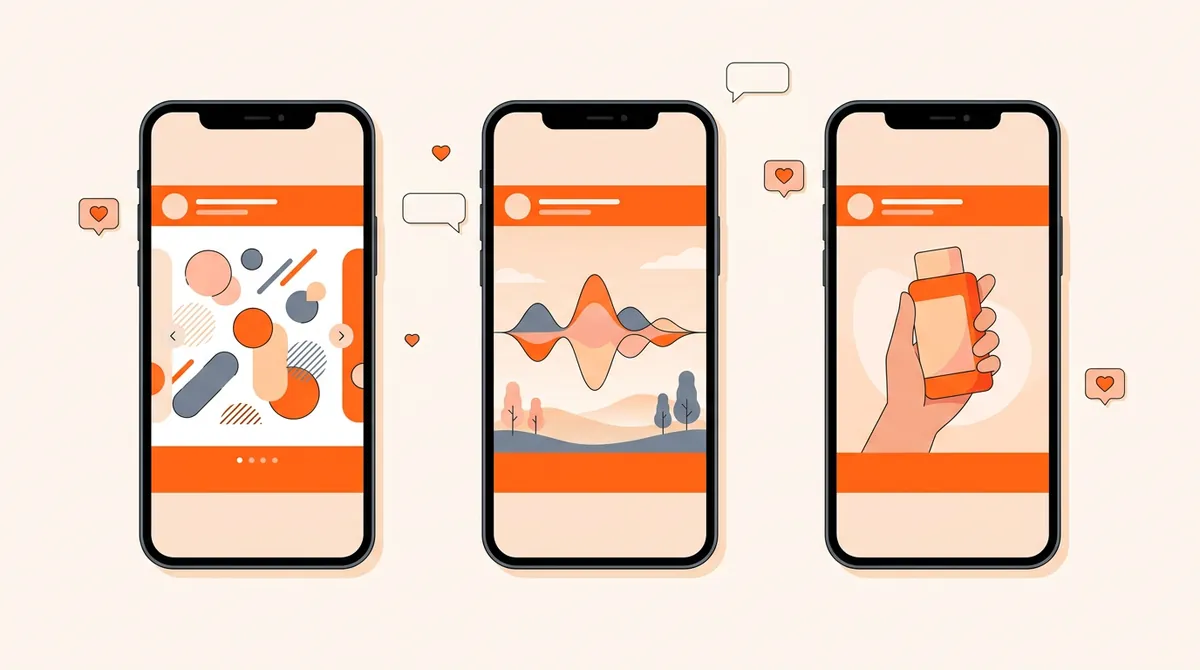
These are the easiest place to start. A carousel puts the hook on slide one and one idea per slide after that. A wall-of-text video lays a longer, punchy text over an ambient clip or a UGC-style video, which suits stories ("3 things I wish I knew before launching") and opinions. Both depend almost entirely on writing, so they reward people who have something to say and do not want to perform it on camera. For length, layout and examples by niche, see our guide to wall of text videos.
Screen recordings, demos and hands-only videos
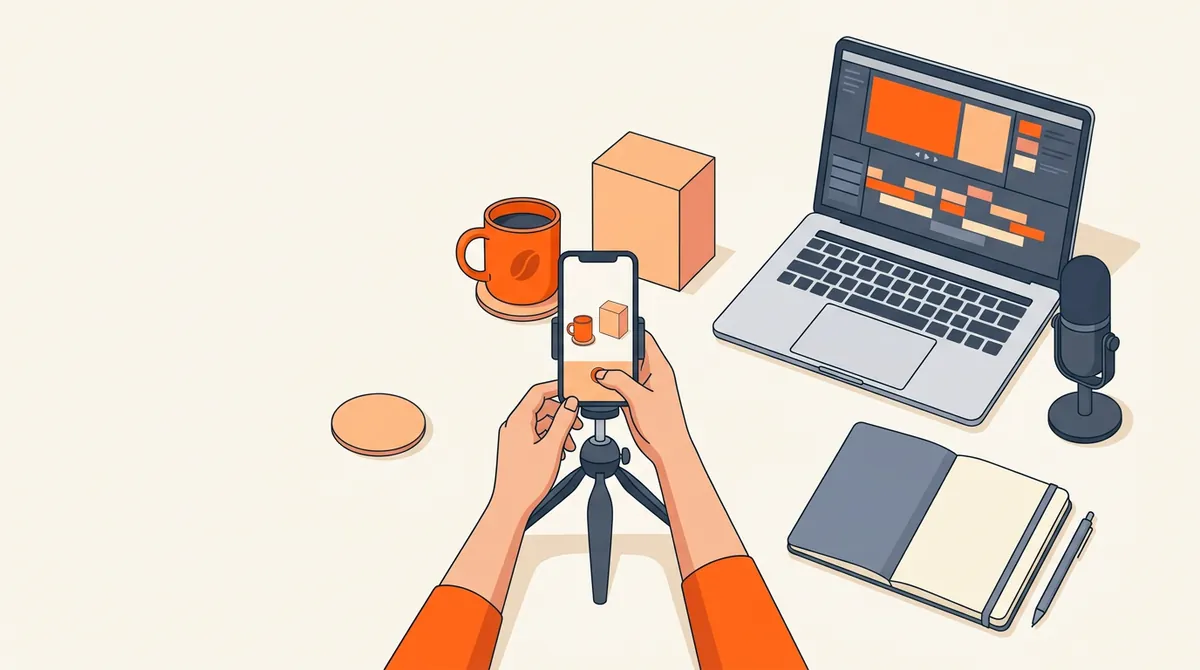
If you sell an app, a tool or a physical product, the product itself is your face. A hook in the first second ("this app writes my captions for me") followed by the product doing its job is one of the most direct faceless formats there is. For physical products, hands-only shots (packing an order, cooking, assembling, testing) feel personal without showing anyone.
Memes, voiceovers, AI videos and AI influencers
Memes travel because the template is already familiar; your job is the caption that makes it specific to your niche. A voiceover adds a human layer to any visual, and your voice becomes the recognizable element. AI videos let you show scenes you could never film. And an AI influencer gives a brand a recurring face without anyone stepping in front of a camera, which is a middle ground between faceless and founder-led.
Which niches work best for a faceless account?
Faceless works best where the value is in the information, the product or the emotion, rather than in the personality of the creator. Niches that fit naturally:
- Apps and SaaS
- Productivity and tools
- Personal finance
- Recipes and food
- Fitness tips
- History and facts
- Books and quotes with commentary
- Crafts and DIY
- Gaming and dev life memes
- Skincare and beauty products
- Travel and places
- Founder and marketing lessons
Harder niches are the ones where people buy the person: coaching built on personal charisma, lifestyle, fashion worn on the body, or anything where the viewer wants to know who is talking before trusting the advice. You can still go faceless there, but you will need stronger trust signals.
How do faceless accounts make money or bring customers?
For a brand, the outcome is not views but visits, signups and sales. A faceless account that posts useful carousels about your topic, demos of your product and relatable memes about your customers' problems is a top-of-funnel channel you own. For creators, the usual routes apply: affiliate links, digital products, newsletters, brand deals, and platform programs where eligible. Note that platform payout programs are where originality rules bite hardest, so a faceless account built on reused clips usually has nothing to monetize.
How do you build trust without showing your face?
Trust on short-form comes from recognition and proof. A face is one shortcut to recognition, but not the only one. The goal is that someone who sees three of your posts in a week knows they come from the same account before reading the name.
Replying to comments matters more on a faceless account than on a personal one. A quick, human reply (or a video reply answering a question) shows there is someone behind the account. The bio should say plainly who runs it and what followers will get.
What do TikTok, Instagram and YouTube say about unoriginal content?
This is where most faceless accounts fail. The classic "theme page" model (download clips, add a caption, repost) has been squeezed on all three platforms.
- TikTok: the Community Guidelines state that content is ineligible for the For You feed "if it includes unoriginal or reused material without anything new". They also require creators to label AI-generated content that shows realistic-looking scenes or people.
- Instagram: after applying originality rules to Reels in 2024, Instagram extended them to photos and carousels on April 30, 2026. Accounts that primarily post unoriginal content are no longer shown in recommendations. Adding a border, a watermark, subtitles or a credit in the caption does not make a repost original, while content you materially edited (unique text, graphics that add information, a remix) can count. An account becomes eligible again once most of its posts over a rolling 30 days are original, according to Instagram's announcement.
- YouTube: the YouTube channel monetization policies exclude reused content (short videos compiled from other social sites, readings of material you did not create) and "inauthentic" content, the name given on July 15, 2025 to what used to be called repetitious content. Examples include image slideshows or scrolling text with minimal or no narrative, commentary or educational value, and AI content made with generic templates that gives an impression of mass production.
The good news: the formats in this guide are all compatible with these rules, as long as the idea, the words and the edit are yours. Using a meme template or stock b-roll is fine; reposting someone else's finished video is not.
A starter weekly plan for a faceless TikTok and Instagram account
Before the plan, set three things once: who the account is for, three to five content angles (a problem you solve, a myth you debunk, a behind-the-scenes, a tip, a customer story) and a simple visual identity. Then run a week like this, and the same video goes to TikTok, Reels and Shorts.
- Monday: a carouselA list or a mini-guide on your main angle. Hook on slide one, one idea per slide, a save-worthy last slide.
- Tuesday: a demo or hands-only videoYour product, tool or process in action, with the result shown in the first seconds.
- Wednesday: a wall of textA short story or opinion over b-roll. This is where your voice shows the most.
- Thursday: a memeA familiar template with a joke only your audience gets. Built for shares.
- Friday: proofA result, a before/after, a customer question answered, or a behind-the-scenes clip.
- Weekend: review and batchLook at views, watch time, saves and follows per post. Keep the hooks and formats that worked, drop the rest, and prepare next week's posts in one sitting.
Five posts a week is a realistic start for most people. If you want to go faster, our guide on how often to post on TikTok, Reels and Shorts explains how to test a higher cadence without burning out. Give the plan at least four weeks before judging it: short-form results are noisy, and a faceless account needs a few dozen posts before its identity becomes recognizable.
Running a faceless account on autopilot
Faceless formats are the easiest to systematize, because none of them needs a filming session. That is the idea behind Bloomr: each brand has editorial lines that hold its content angles, its format mix and its language, and Auto Gen drafts posts one after another from those angles. The formats are the faceless ones from this guide: carousels, wall-of-text videos, green screen memes, AI videos, hook + demo videos, and UGC videos with an AI influencer when you want a recurring face. A music catalog and a media library tagged by AI (your own photos, videos and demos) keep the posts consistent and original to your brand. You keep the good drafts, skip the rest, and publish or schedule them to TikTok, Instagram and YouTube Shorts. For the broader workflow, see how to automate short-form content with AI.
Whatever tool you use, the rule stays the same: a faceless account grows when every post is original, recognizable and worth stopping for. Pick two or three formats, give the account a voice, show proof, and keep posting long enough for people to start recognizing you without ever seeing you.